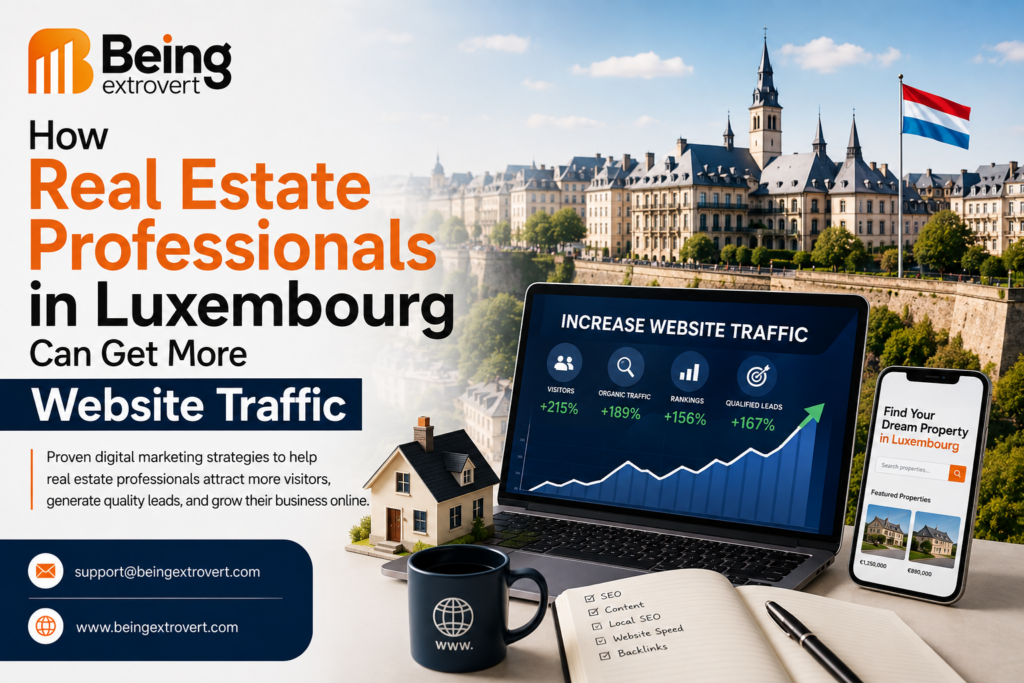
If you’re a Real Estate Professionals in Luxembourg, you already know the market is small but brutally competitive online. There are more agencies per capita here than almost anywhere else in Europe, which means a Real Estate Professional’s own website is usually fighting portals just to get noticed before anyone even reaches an actual listing. Getting real, qualified traffic to that site isn’t about one blog post going viral. It comes down to doing real estate SEO in Luxembourg properly, in a way that matches how people here genuinely search.
Google’s May 2026 core update basically confirmed something a lot of SEOs already suspected: content written for one specific reader, with real answers, beats content written to please an algorithm. That’s actually good news if you’re a smaller agency. You can move faster and get more specific than a huge portal ever will.
Why Traffic Is Harder to Win Here Than Almost Anywhere Else
A few things make Luxembourg different.
- First, people search in French, German, English, and Luxembourgish, sometimes switching languages in the same session depending on whether they’re comparing neighborhoods or trying to read through legal terms.
- Second, a big chunk of demand comes from across the border — France, Belgium, Germany — so a lot of searches aren’t just “apartment Luxembourg,” they’re really about commute times, tax residency, or getting a mortgage as a cross-border buyer.
- Third, most people’s first click still goes to an aggregator site, not an individual agency.
So a Real Estate Professional’s own site has to earn trust by being specific, not by having the most listings.
Any traffic strategy that ignores these three things is basically a strategy built for a different market.
Stop Writing Pages That Only List Property
A site that’s just listings, page after page, gives Google very little to actually rank. Search engines — and now AI-driven answer tools too — tend to favor pages that answer the question behind the search, not just show the product. That’s really what semantic SEO and AEO (answer engine optimization) mean in practice: structure your content so it directly answers something a person, or an AI assistant, might actually ask.
A few things that genuinely move the needle:
- Neighborhood guides that answer real questions people type in, like “is Kirchberg good for families” or “average price per square meter in Belair.”
- Plain-language pages on notary fees, registration tax, and what the buying process looks like for someone moving from abroad.
- Content aimed at commuters, comparing living in Luxembourg City versus nearby towns just across the French or Belgian border.
- FAQ sections written to be quoted directly — this is exactly the kind of thing Google’s featured snippets and AI answer boxes pull from.
One thing worth saying clearly: don’t try to make one page do everything. A page chasing “luxury apartments,” “rental yield,” and “mortgage advice” all at once usually ends up ranking for none of them.
The Technical Side Still Decides Who Actually Wins
Good content only helps if the site is technically sound enough to deserve the ranking.
For a Luxembourg real estate site, a few things matter more than people expect.
- Property photos are heavy, so compressing them and using something like WebP keeps listing pages loading fast on mobile, which is where most buyers are browsing anyway.
- If you’re running multilingual pages, href lang tags stop the French, German, and English versions from competing with each other for the same ranking spot.
- A clean URL structure, organized by city and property type, just makes life easier for both crawlers and actual visitors trying to find their way around.
Local Signals Matter More Than a Lot of Realtors Realize
Geo-optimization isn’t just sticking “Luxembourg” into a title tag and calling it done. It means actually building authority around specific communes — Limpertsberg, Bonnevoie, Strassen, Esch-sur-Alzette, wherever you actually work. A realtor who keeps publishing accurate, current information about one or two neighborhoods will out-rank a generic “real estate agent in Luxembourg” page almost every time.
Some things worth doing here:
- Keep your Google Business Profile fully filled out, with current hours, service areas, and photos.
- Collect reviews and actually respond to them, since both recency and response rate feed into local visibility.
- Get your agency listed in relevant local directories and chambers of commerce.
- Try to earn backlinks from Luxembourg news sites, expat forums, or relocation guides — a link from a genuinely local, relevant source carries a lot more weight than one from some generic global directory.
Show Your Expertise, Don’t Just Claim It
Google’s E-E-A-T guidance (experience, expertise, authority, trust) hasn’t gone away with this update — if anything, the May 2026 rollout leaned harder into rewarding sites that can actually demonstrate expertise, not just claim it.
For a Real Estate Professional’s site, that might mean:
- Author bios with real credentials and years of local experience.
- Market reports that are dated and specific rather than “the Luxembourg market is strong right now.”
- Honest case studies of actual transactions without overselling the results.
- Clear contact details with a real office address — which helps both with trust and with local search verification.
Track What Actually Brings In Leads
At the end of the day, traffic only matters if it turns into inquiries.
Worth keeping an eye on:
- Which neighborhood or FAQ pages are generating the most contact form submissions.
- Which search terms are bringing in cross-border buyers versus local ones (since their needs are pretty different).
- How much time people actually spend on your guides compared to your listing pages.
If a page ranks well but never leads to a single inquiry, it’s probably worth rewriting rather than leaving alone.
Bottom Line
Getting more real estate website traffic in Luxembourg really comes down to being genuinely useful to a specific audience that’s often multilingual and often living across a border. Get the technical basics right, write content around actual neighborhoods and actual questions, show your expertise instead of just stating it, and keep building local trust signals. Do that consistently, and the traffic growth holds up — even when the next algorithm update rolls around.